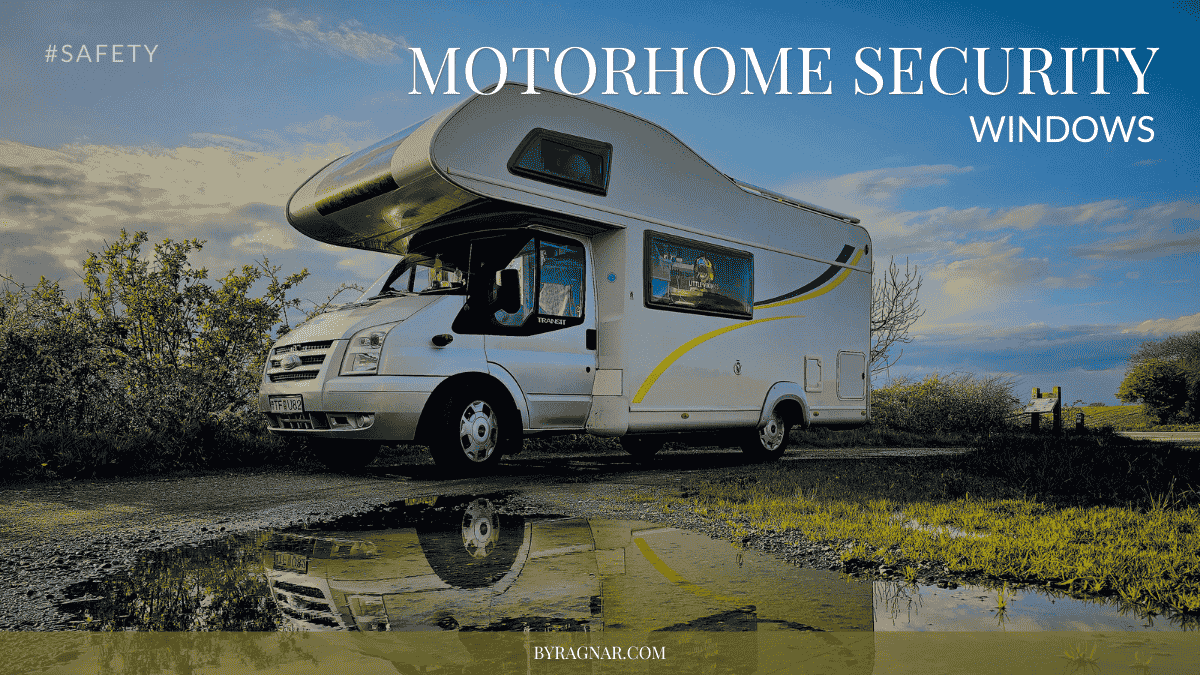
Motorhome windows are a bit special. They’re light, elegant, and let in plenty of light and fresh air — but unfortunately, they’re also one of the weakest points in our home on wheels.
When people think about break-ins, they usually focus on the door.
Someone who thinks like a thief, however, looks at the window first.
That’s not because motorhome owners are careless — it’s simply because most motorhome windows are made of plastic, with lightweight frames and fittings designed for comfort, not resistance.
That’s why it’s worth taking a closer look at a few simple steps that can help us feel better prepared — and sleep a little more peacefully at night.

Why Windows Are the Weakest Point
Most motorhome windows are made of acrylic (plastic/acrylic) and mounted with lightweight aluminium or plastic fittings. This keeps weight down and insulation high, but it also makes them more vulnerable.
They:
- can flex with surprisingly little force,
- are relatively easy to lift or pry open,
- rarely have strong built-in locking mechanisms,
- are often located in shaded or quiet areas of the vehicle.
Experienced thieves don’t use fancy tools or take big risks. Often, applying pressure to a corner of a window or using a small lever is enough to lift the frame. This isn’t rocket science — it’s quiet, simple, and effective.
But here’s the good news:
With small, affordable changes, we can make this a lot harder.
Which Windows Are Most Vulnerable?
This varies between vehicles, but the most common types include:
1. Acrylic Side Windows
The most common type, with lightweight frames and double acrylic panes.
Weakness: Flexible, easy to apply force at the corners.
2. Roof Windows / Skylights
Often less visible and sometimes fitted with weaker mounts.
Weakness: Can be pushed or flexed, especially when older or worn.
3. Sliding Door Windows (more common in campervans and caravans)
Sometimes left partially open or poorly secured.
Weakness: Slide open easily if nothing physically blocks them.
4. Older Windows with Worn Hinges or Tired Rubber Seals
Often overlooked until damage becomes obvious.
Weakness: Excess movement makes prying much easier.
There’s no need to panic — these are all issues that can be fixed or improved.

What Can We Do? – Cost-Effective Solutions That Work
This is what most people want to know:
How can we improve window security without spending a fortune?
Let’s break it down into three levels.
A) Cheap and Simple – Anyone Can Do This
✔ Never leave windows open overnight or when the vehicle is unattended
Sounds obvious — but it’s easier to forget than you might think.
✔ Regularly check hinges, seals, and fittings
A small fault can quickly become a big weak spot.
✔ Use a security bar or wooden dowel on sliding windows
Prevents the window from being slid open.
✔ Use curtains or blackout blinds
If thieves can’t see inside, they’re often less interested.
✔ Motion sensors near windows
They don’t need to be expensive — just enough to deter.
✔ Counter-handle on window locks
A simple addition that prevents the lock from being lifted or manipulated from the outside.
👉 Simple counter-handles can be purchased on Amazon.
B) Mid-Range Cost – Big Improvement for Little Money
✔ Additional window lock latches
An inexpensive way to double resistance.
✔ Reinforcement plates inside the frame
Move weak points from plastic to metal.
✔ Anti-shatter window film
Slows down breakage and increases noise — something thieves hate.
✔ Thicker hinges or upgraded fittings
A great upgrade for older vehicles.
👉 A simple chain lock once saved us from a break-in.
C) The Strongest Options
✔ Aluminium security frames
Distribute force and make flexing the window far more difficult.
✔ Internal security grilles
Not pretty — but extremely effective.
✔ Window opening alarm systems
Motion or contact sensors that trigger an alarm if a window is opened illegally.
👉 I installed motion sensors on all the windows in our motorhome. I bought them on Amazon.

Think Like a Thief — Then Sleep Like a Motorhome Owner
It may sound strange, but it helps.
If you were a thief, which option would you choose?
- A dark window hidden from the road?
- A window with worn fittings?
- A window left slightly open?
These are all things that can be fixed in minutes.
Thieves hate hassle.
We just need to create a little bit of it.
When Is Enough, Enough?
Security shouldn’t overshadow the joy of travelling.
You don’t need to do everything at once or buy every product you see online.
Start with a few simple steps that suit you and your vehicle.
The rest can wait.
Motorhome security, like everything else, is built from small habits that add up.
A Bit of Experience — and a Gentle Disclaimer
I’m not a security specialist — just someone who has picked up a bit of experience on the road and wants to share what has worked for me. I’m always open to good advice, so if you have your own experiences or clever tips, feel free to share them in the comments. We’re learning this together.
It’s also important to include the cab windows when thinking about security. These are often targeted by thieves. I’ve personally seen a side window removed cleanly after a thief cut the rubber seal and lifted the glass out intact. This is more common in older vehicles, however it’s something everyone should be aware of. Cab windows are part of the overall security picture — don’t forget them.
Another important point: windows serve two purposes. They’re potential entry points — but also emergency exits. When I first started travelling with my young daughter, I thought a lot about the window next to her bed. Thankfully, I didn’t install a fixed internal grille, as that would have blocked her only safe escape route. Instead, I focused on strengthening the window without compromising emergency access.
And finally: never place stickers like “Baby on Board” on motorhome windows. Because while they seem harmless, they can attract a very different kind of attention — the kind we want to avoid.

Final Thoughts – Calm, Not Fear
The goal here isn’t fear — it’s peace of mind.
Sleeping better. Enjoying the journey more.
If we take things one step at a time and think just slightly ahead of potential problems, we’re on the right track.
One step ahead.
One window handle at a time.
Read Next:
Frequently Asked Questions
Why are windows the weakest point in a motorhome?
Most motorhome windows are made of acrylic or plastic with lightweight frames. They’re great for insulation and weight but offer less resistance than doors, making them an attractive entry point.
Is it realistic to improve window security without spending much money?
Absolutely. Many effective solutions cost very little, such as better routines, additional locks, counter-handles, or simple motion lights. A small inconvenience for a thief can make a big difference.
Are all windows equally vulnerable?
No. Side acrylic windows, roof windows, and older windows with worn seals are often more vulnerable. Windows in dark or hidden areas are also more likely targets.
Does closing curtains or blinds really help?
Yes. Thieves like to see what they’re dealing with. If they can’t see inside, interest often drops significantly. Blackout blinds are simple, cheap, and effective.
Are security grilles always a good idea?
Not necessarily. Windows also serve as emergency exits. Security solutions should never block escape routes in an emergency.
What about cab windows?
They’re often overlooked but are common entry points, especially in older vehicles where rubber seals can be cut. Cab windows should always be part of your security plan.
What’s the single most important piece of advice?
Stay one step ahead. Don’t try to do everything at once — choose a few simple measures that suit your vehicle. Security is built from small habits, not one big solution.